If you’ve heard everyone talking about padel recently, you might be wondering what all the fuss is about. Is it just tennis with smaller rackets? Is it easier to play? And what exactly makes it different?
Although padel and tennis share plenty of similarities, they’re actually two quite different sports. Both involve hitting a ball over a net, both are great for fitness, and both can be enjoyed socially. However, the courts, equipment, rules and style of play are surprisingly different.
With padel growing in popularity across the UK, there’s never been a better time to discover what makes this exciting racket sport so enjoyable.
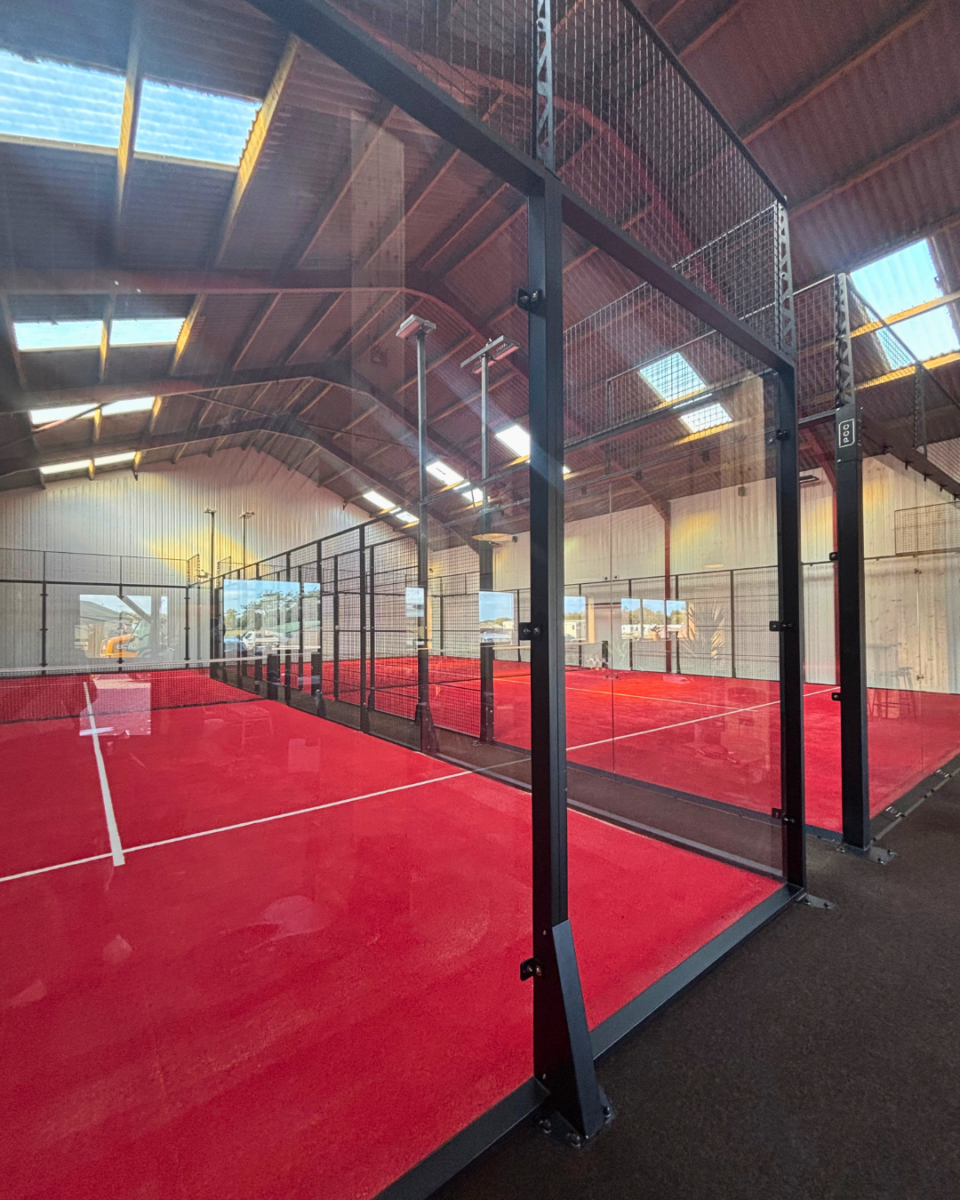
At Thorpe Farm Padel, located between Barnard Castle and Richmond, we have two indoor padel courts, making it easy to give the sport a try whatever the weather.
Key Takeaways: Padel vs Tennis
Court size: Padel courts are smaller than tennis courts and are surrounded by walls.
Equipment: Padel uses a solid, stringless racket and a lower-pressure ball.
Serving: Padel serves are underarm, while tennis serves are generally overhead.
Gameplay: Padel allows players to use the surrounding walls to keep rallies going.
Difficulty: Padel is generally easier for complete beginners to pick up.
Social aspect: Padel is most commonly played in doubles, making it a particularly sociable sport.
Scoring: Both sports use a similar scoring system, including 15, 30, 40 and games.
1. Padel vs Tennis: The Main Differences
At first glance, padel looks like a combination of tennis and squash. However, once you step onto a court, you’ll quickly realise that it has its own distinctive style of play.
Here’s a quick comparison of the two sports:
| Feature | Padel | Tennis |
|---|---|---|
| Court size | 20m x 10m (doubles) | 23.77m x 10.97m (doubles) |
| Court surroundings | Enclosed by glass and mesh walls | Usually open |
| Racket | Solid with perforations | Strung racket |
| Ball | Similar appearance, lower pressure | Standard tennis ball |
| Serve | Underarm, after bouncing | Usually overhead |
| Players | Usually doubles | Singles or doubles |
| Walls | Can be used during rallies | Not part of standard play |
| Scoring | Similar to tennis | 15, 30, 40, game |
While tennis often rewards powerful serves and strong groundstrokes, padel places greater emphasis on positioning, teamwork, control and strategy.
2. Is Padel Easier Than Tennis?
For most beginners, padel is easier to learn than tennis.
One of the biggest reasons behind padel’s popularity is how quickly new players can get involved.
In tennis, it can take time to develop a consistent serve, learn the correct technique and maintain longer rallies. Padel, on the other hand, is designed around shorter movements, controlled shots and teamwork.
The smaller court also means there’s generally less ground to cover, while the surrounding walls help keep the ball in play.
That doesn’t mean padel is an easy sport to master! As players improve, the game becomes increasingly tactical, with positioning, angles and clever shot selection making all the difference.
But if you’ve never picked up a racket before, padel is a fantastic place to start.
For more information about the basics, take a look at our beginner’s guide to how to play padel.
3. What’s the Difference Between a Padel Court and a Tennis Court?
One of the most obvious differences between padel and tennis is the court itself.
Tennis Courts
A standard tennis court measures 23.77 metres long, with a width of 8.23 metres for singles and 10.97 metres for doubles.
Tennis courts are usually open, meaning that once the ball travels beyond the playing boundaries, the point is over.
Padel Courts
A standard doubles padel court measures just 20 metres long and 10 metres wide.
However, the biggest difference is that padel courts are enclosed by glass and mesh walls.
These walls form an important part of the game. During a rally, the ball can bounce off the walls after hitting the ground, allowing players to return shots that would otherwise be out of reach.
This creates longer rallies, interesting angles and plenty of opportunities for tactical play.
At Thorpe Farm, we have both an indoor doubles court and an indoor singles court, giving players the opportunity to enjoy different formats of the game.
Our indoor facilities also mean you can enjoy padel throughout the year, without worrying about rain, wind or unpredictable British weather.
Find out more about why indoor padel is becoming so popular in the UK.
4. Padel Rackets vs Tennis Rackets
Another key difference between padel and tennis is the equipment.
Tennis rackets are larger, with a frame and strings that allow players to generate significant power and spin.
Padel rackets, meanwhile, are shorter and solid, with small holes across the hitting surface. They don’t have strings and are generally easier for beginners to handle.
The balls also look very similar, although padel balls have a slightly lower specified internal pressure than standard tennis balls.
Do You Need Your Own Padel Racket?
Not at Thorpe Farm!
We offer complimentary racket hire with court bookings, so there’s no need to invest in expensive equipment before trying the sport.
All you need is comfortable sports clothing, suitable non-marking court shoes and a willingness to give something new a go.
5. Are the Rules of Padel and Tennis the Same?
Padel and tennis share a very similar scoring system, but there are some important differences in how the games are played.
Serving
In tennis, players generally serve overhead, often using power and spin to gain an advantage.
In padel, serves must be played underarm, at or below waist height, after bouncing the ball behind the service line.
This makes serving much more approachable for beginners.
Using the Walls
In tennis, a ball that travels outside the court boundaries is normally out.
In padel, players can use the walls during a rally, provided the ball has bounced correctly within the court.
For example, if your opponent hits the ball into your side of the court, you can allow it to bounce off the back glass before returning it.
Learning to use the walls is one of the most enjoyable parts of improving your padel skills.
Scoring
Both sports traditionally use the familiar tennis scoring system:
15
30
40
Game
A set is normally won by the first team to reach six games with a two-game advantage, with a tie-break typically played at 6–6.
Some padel competitions use alternative deciding-point formats at deuce, so it’s worth checking the rules before playing.
6. Is Padel or Tennis Better for Fitness?
Both padel and tennis offer fantastic physical and mental health benefits.
They’re great ways to improve cardiovascular fitness, coordination, agility and reaction times, while also encouraging you to get active and enjoy some friendly competition.
Tennis often involves longer sprints and more ground to cover, particularly in singles matches.
Padel, meanwhile, involves quick reactions, short bursts of movement and frequent changes of direction.
Because padel is usually played in doubles, it can feel less physically demanding for beginners, although competitive matches can still provide an excellent workout.
Ultimately, the best sport for fitness is the one you enjoy enough to play regularly.
7. Why Is Padel Becoming So Popular in the UK?
Padel has experienced a surge in popularity across the UK, and it’s easy to understand why.
Unlike some sports that require several lessons before you can comfortably play a match, padel offers a much more accessible introduction.
It’s particularly popular because:
It’s beginner-friendly: You don’t need previous racket sport experience to enjoy your first game.
It’s sociable: Doubles matches make it a great activity with friends, family or colleagues.
It’s suitable for different ages: Players of varying abilities can enjoy the sport together.
It’s fun and competitive: Longer rallies and tactical gameplay make every point interesting.
It’s a great way to stay active: Padel combines exercise with an enjoyable social experience.
It’s also a fantastic alternative for people who have previously played tennis but are looking for something a little different.
Whether you’re a complete beginner or an experienced tennis player, padel offers a fresh challenge.
8. Can Tennis Players Easily Switch to Padel?
Absolutely! In fact, many tennis players find that their existing skills give them a useful starting point.
Hand-eye coordination, understanding court positioning and general racket control are all transferable.
However, tennis players often need to adapt their technique.
In padel, powerful shots aren’t always the most effective option. Controlled placement, patience and clever use of the walls can be far more valuable.
The underarm serve also takes some getting used to, as does playing in an enclosed court.
For experienced tennis players, padel offers a great opportunity to develop a different set of skills while still enjoying the competitive nature of a racket sport.
9. Where Can You Try Padel Near Barnard Castle, Richmond or Darlington?
If you’re interested in giving padel a go, you’ll find our indoor courts at Thorpe Farm, conveniently located on the A66 between Barnard Castle and Richmond.
We welcome beginners, experienced players and anyone looking for a new way to stay active.
Our facilities include:
One indoor doubles padel court
One indoor singles padel court
Court hire from £20 per hour
Complimentary racket hire
Toilets, shower and kitchen facilities
Free on-site parking
And there’s plenty more to enjoy at Thorpe Farm beyond the courts.
Why not make a morning or afternoon of it? Enjoy a game of padel followed by coffee, lunch or a well-earned treat at our on-site café.
You can also explore our dog-friendly café at Thorpe Farm, ideal if you’re visiting with your four-legged companion.
Whether you’re looking for padel near Barnard Castle, padel near Richmond or padel near Darlington, Thorpe Farm offers a welcoming place to play.
10. Padel vs Tennis: Which Should You Try?
If you already love tennis, there’s no reason to stop playing. Both sports offer excellent exercise, competition and enjoyment.
However, if you’re looking for something that’s easy to learn, sociable and a little different, padel is definitely worth trying.
Its smaller court, underarm serving and exciting wall-based rallies make it especially appealing to beginners, while the tactical side of the game ensures there’s always something new to learn.
And who knows? Your first game might just turn into a regular weekly activity!
Frequently Asked Questions About Padel vs Tennis
What is the biggest difference between padel and tennis?
The biggest difference is that padel is played on a smaller, enclosed court where the walls can be used during rallies. Padel also uses solid rackets and underarm serving, making it generally easier for beginners to learn.
Is padel easier to play than tennis?
Yes, padel is generally considered easier for beginners because of its smaller court, shorter rackets and underarm serve. However, competitive padel requires plenty of skill, strategy and coordination.
Can you play padel if you’ve never played tennis?
Absolutely. You don’t need any previous tennis or racket sport experience to start playing padel. Many beginners can enjoy rallies during their very first session.
Do you need four people to play padel?
No. Although padel is traditionally played as doubles with four players, singles padel is also possible on specially designed courts. Thorpe Farm has both a singles and doubles court.
Is padel more expensive than tennis?
The cost depends on the venue, location and whether you’re hiring equipment. At Thorpe Farm, padel court hire starts from £20 per hour, with complimentary racket hire included.
Can you play padel indoors?
Yes! Indoor padel is increasingly popular because it allows players to enjoy the sport throughout the year, regardless of the weather. Thorpe Farm has two indoor courts available to book.
Ready to Give Padel a Try at Thorpe Farm?
Whether you’re switching from tennis or picking up a racket for the very first time, we’d love to welcome you to Thorpe Farm Padel.
With indoor courts, complimentary racket hire and a fantastic countryside location, it’s a great place to discover your new favourite sport.
Book your court today and discover what makes padel so much fun!